The Silent Agreements That Hold Families Together
Families operate on unspoken rules that maintain peace but often suppress truth. These patterns assign roles and hidden burdens, creating distance over time. Real connection begins when families acknowledge and challenge what’s been silently accepted.
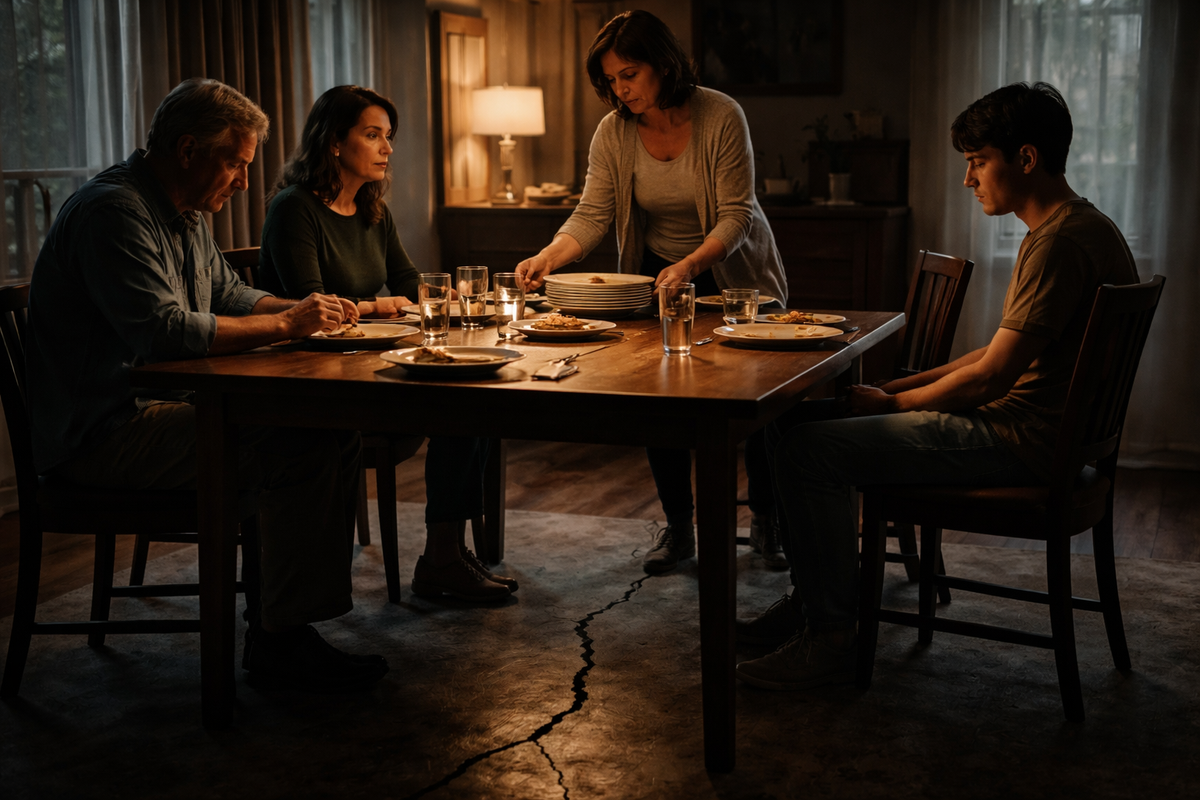
Every family has rules nobody remembers making. They are not posted anywhere. Nobody votes on them. They just settle in over time, built out of habit, fear, loyalty, and the plain old need to get through the week. One person always calls first after a fight. One person keeps dinner moving when the room gets tense. One person is allowed to be rude because that is just how they are. Another becomes the dependable one and never quite gets permission to stop.
I have lived inside enough families, blood and chosen both, to know these arrangements can look like peace from the outside. People say, They are close. They show up for each other. And sometimes that is true. Sometimes what holds a family together is love. But a lot of the time, what holds it together is a quieter contract. We will not say this part out loud if you do not make us. We will keep stepping around the same crack in the floor and call that stability.
Not every silent agreement is unhealthy. Families run on small forms of wordless care all the time. Somebody sees the mother is tired and starts clearing plates. A sister changes the subject because she can feel the table tightening. An adult son stays a little longer because he knows his father is lonelier than he lets on. There is tenderness in that. The trouble starts when the unspoken rule is no longer about kindness, but about which truths the family is forbidden to touch.
That is the part people miss. They think family trouble has to be loud to count. Doors slamming. Holidays blown apart. Somebody leaving in tears. That happens. But a lot of families are held together by the opposite. By what gets swallowed. By what gets translated into something easier to live beside. Not because nobody knows. Because everybody knows, and everybody has decided silent knowledge costs less than plain speech.
You can see it in the roles people fall into and then start calling personality. The peacemaker is often just the one who learned early that other people's feelings could take over a room if nobody managed them. The funny one learned that a joke can redirect a conversation faster than honesty can. The difficult one is often the person saying the thing everybody else agreed to bury. Then they become the problem, even when they are not wrong. I have watched children grow into adults still carrying assignments they got before they had language for them. Be easy. Be useful. Do not need too much. Make this look normal.
Children always know more than adults hope. They may not understand the full story, but they understand the temperature. They know which name changes the mood in the room. They know whether affection arrives warm or careful. They know when an apology is real and when the family is just moving on because life still needs handling. We say they are too young to understand when what we really mean is we hope they cannot describe it yet.
These silent agreements become the emotional architecture of a family. They tell everyone where they can stand, what they can ask for, how much reality the room can tolerate before it starts to shake. I do not say that with judgment from a safe distance. I know why families do it. Sometimes people are tired. Sometimes money is tight, somebody is ill, somebody is grieving, somebody is barely hanging on. In those seasons, silence can feel efficient. We can survive this dinner. We can get through this weekend. We can deal with the rest later. Later is where a lot of family truth goes to rot.
There is still a cost. There is always a cost. Silent agreements keep the structure standing, but they also decide who has to carry the hidden weight of keeping it upright. Usually that labor does not get shared fairly. One person absorbs the impact. One person translates everybody's moods. One person keeps forgiving what was never repaired. That person gets praised for being strong, which sounds flattering until you realize strength is sometimes just what people call your lack of options. I have been that person. So have a lot of women, a lot of eldest children, a lot of people who got good at holding steady because nobody else was going to.
What makes these agreements hard to break is that they are protecting something real. If you say, We all organize ourselves around your temper, then you also have to admit how long everyone has been afraid. If you say, I am always the one holding this family together, then you may have to face the possibility that nobody is coming to relieve you. Truth does not just clear the air. Sometimes it changes the whole floor plan. That is why families resist it. Not because they are always dishonest, but because honesty rearranges things.
Still, pretending has a price too. Families pay it in distance that nobody can quite explain. In adult children who call less because every conversation still asks them to play the old role. In siblings who love each other but cannot fully relax together. In parents who wonder why gatherings feel polite instead of close. People think silence preserves connection. Sometimes it only preserves access.
The healthiest families I know are not the ones without unspoken patterns. I do not think those exist. They are the ones that can drag some of those patterns into the light before they harden into law. The ones that can say, This is what we have been doing. This is who it has been costing. This cannot keep being the price of peace. That kind of honesty does not destroy a family. More often, it is the first real chance a family has had to hold together without asking one person to disappear inside the work of keeping everybody else comfortable.